Thank you for all your support these last years. Right now, I’m taking a bit of a hiatus. But not to worry — I’ll be back to blogging here soon. In the meantime, you can follow my latest work on CMT.com/News and, as always, @ConsumingPR on Twitter. See you there!
Ways to Boost Your Content Marketing
19 AugThe way companies interact and engage with both prospects and current customers is becoming increasingly complex. Salesfusion shares a few pieces of advice on how you can use content marketing to increase your ROI, brand awareness and engagement:
1) Define your objectives. What is your purpose? Are you trying to increase brand awareness, drive more sales, or build a base of brand loyal customers?
2) Attract, Convert, Nurture. Research your leads to understand their industry, stage in the buying cycle, company size, needs, and more. Your leads are more likely to feel connected to your brand if you create customized content that speaks to them.
3) Strategize. Push content out across a variety of different marketing channels to reach your target audience. Determine what the message will be and how you will convey it. Always keep your ultimate goal in mind when building a full 360 degree consisten marketing campaign.
4) Invest in dynamic content. Dynamic content is when certain aspects of your landing pages or email marketing content change based on the user’s interests to create a relevant, tailored experience. You can garner information to implement this by requesting simple online surveys be completed by your website visitors.
5) Stay organized. Embrace a platform like marketing automation to keep your content marketing organized and segmented. Create a detailed task list to ensure you’re thoroughly covering all steps of the process and allowing time to test and review content before it is pushed out to the public.
Any other tips you’d add to this list? Share your advice by leaving a comment!
#Music Monday: Fruits of Their Labor
18 AugCoincidently, a few of my favorite songs right now have something to do with fruit in the title. So for this Music Monday, I’m bringing you a fruit salad featuring BRANX, The Polish Ambassador and SOPHIE. All very different sounds:
1) There’s BRANX, who gets me funk stepping all around my living room.
2) Then we have The Polish Ambassador – he’s always there to put a smile on my face with his delicate beats.
3) Finally, SOPHIE’s ‘Lemonade,’ bass shakes my bones and interludes of some sort of Sailor Moon-esque sample makes me giggle. Very experimental, but worth the full listen.
Enjoy!
And for something a little different…
Model Ashley Smith and Nylo Bring Music and Fashion Together Again with RVCA for Fall 2014
12 AugRVCA Womens | Fall 2014 from RVCA on Vimeo.
RVCA debuts the Women’s Fall 2014 Campaign featuring RVCA Advocate Ashley Smith in yet another beautiful video lookbook featuring music by Nylo. Texas born model Smith has partnered with the lifestyle brand to deliver a series of signature capsule collections in select retailers worldwide.
Interestingly, Founder and President, PM Tenore’s intention from the very beginning has been to create a platform for RVCA, which combines art, music, fashion and a modern lifestyle in an original way. At the forefront of this vision has been RVCA’s Artist Network Program (ANP)-a venture established to showcase the talents of accomplished as well as unknown artists who inspire our generation and push the boundaries of creative excellence.
Shop the collection featured in the film at: https://www.rvca.com/b/post/rvca-womens-fall-2014-lookbook. And, stay connected with RVCA via Instagram at @RVCA_WOMENS
#Music Monday: Goldroom “Til Sunrise”
11 Aug
Two weeks ago Goldroom announced “Til Sunrise,” his first new original release since dropping “Embrace” in September of 2013. Featuring vocal contributions from Mammals, Goldroom finally reveals the track today after making the vocal stems from the track available for download to give fans the opportunity to “Premix” the song.
FYI – You might see different spellings of the song: “Til Sunrise” and “Till Sunrise.” Let’s take a quick spelling lesson, shall we? “Till” is like a cash register and “til” is short for the word until. However, when it comes to music… eh, we’ll let it slide 😉
Let me tell you… the track is spectacular! The soundcloud tags are spot on with #dreamwave, #chillwave and #daytimedisco and #chillwave. The whispery vocals and tropical sounds let you drift away to paradise.
One of my absolute favorite synth pop guys, Goldroom recently wrapped up the Verano tour, which featured a rebuilt live band with shows in LA, NYC and SF. AXS Music and Buzzbands LA had great things to say about the new live shows, with Vibe calling Goldroom a “mastermind producer” and writing that his music “feels like cruising down the 101 with the top down and zero cares in the world.”
Give it a listen! Thoughts?
Foursquare. It’s Back and Better Than Ever!
11 AugJust three years ago, I was sitting with CEO/Co-Founder Dennis Crowley at his Girls in Tech fireside chat in San Francisco where he described his vision for Foursquare.
He compared this future iteration to Clippy. You know, that silly (and annoying) paperclip from Microsoft Office living on the side of your screen. He explained that Foursquare would one day “be your personal tour guide, or Clippy for your pocket. This personal tour guide would be so in tune with your everyday behaviors, that it would recommend places to check out as you walked around the city you’re in.” Check out my video of Dennis Crowley describing the future of Foursquare on Socialcam here.
Now, they’ve brought this idea to life! Introducing the new Foursquare, “which you can download today, learns what you like, and leads you to places you’ll love,” explains Foursquare.
Here’s how Foursquare describes the new functionalities:
Our phones should learn about us – our tastes, our social connections, and our preferences. And, using what they know, they should help us better explore the world around us. If you love vintage clothing, it should tell you that there is a hidden gem nearby. If you’re in a new city, it should tell you that your friend Katy highly recommends this hole-in-the-wall restaurant downtown. If you crave spicy food, it should advise which dishes you should order when you sit down for dinner.
Check out the video below to see it in action!
Content Series: Budweiser launches MADE Underground to Create the Ultimate Band of Street Performers
28 Jul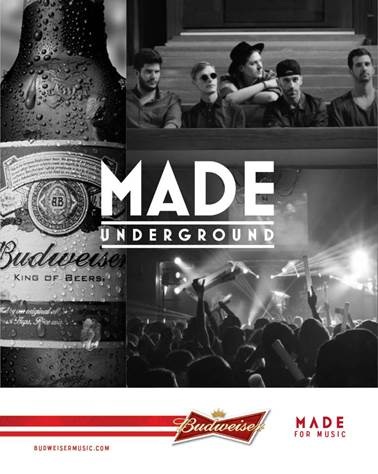
Today, Budweiser unveiled its 2014 MADE for Music campaign, drawing on the brand’s long-standing support of great music and great artists of all types around the world. Inspired by the global confluence of music and other dynamic forms of artistic expression, Budweiser MADE for Music gives global music fans access to some of the most unique musicians, artists and creators that inspire greatness in all of us.
MADE Underground will follow Budweiser’s round-the-globe search for an eclectic mix of street musicians to create a global “busker band”, consisting of the most unique underground and street performers, that will ultimately perform at the Budweiser Made in America festival on Saturday, August 30th.
“Music’s ability to inspire millions of people around the world everyday can come from unknown but passionate artists like these street musicians as easily as it can from global icons like JAY Z and Rihanna. We’re proud to celebrate that this year by giving fans access to all levels of artists dedicated to pursuing their craft with passion and creativity,” said Camilo Durana, Global Director, Budweiser Sports and Entertainment.
The MADE Underground series, produced by Noisey, VICE’s music channel, Budweiser and Alex Da Kid, will follow Jamie N Commons, a British folk musician and Brooklyn-based four-piece band, X Ambassadors, as they hit the streets and subways of London, Rio de Janeiro, New York and Philadelphia to find these talented, unsung geniuses of global music. They, in collaboration with Budweiser, will bring together the passion and talent of underground performers from around the world to convene an all-star symphony of diverse street sounds from these world capitals.
“Living in New York, it’s hard to miss the amazing talent around every corner which is why I am so thrilled to work with Budweiser’s MADE Underground to showcase the truly brilliant street performers throughout the world and highlight the energy they bring to our city life,” said Sam Harris of X Ambassadors.
How is this content series being marketed, you ask?
The MADE Underground series trailer is available now at a Budweiser YouTube site via vanity URL, www.budweisermusic.com. Further episodes will be available in the coming weeks: London on August 4, New York on August 12, Philadelphia on August 19 and Rio on August 26. The series will then feature two episodes around the band’s first rehearsal in LA and then finally their performance at the 2014 Budweiser Made in America Festival, which will both be available post festival.
Once again, MADE for Music will bring fans closer to Rihanna through a series of collaborations to be announced later this year. Additionally, the 2014 MADE for Music initiative will be supported by a global campaign featuring JAY Z and Rihanna running across more than 85 countries around the world where fans can enjoy a Budweiser. It will integrate refreshed OOH (Out of Home), print, MADE for Music packaging and content available on budweisermusic.com.
Budweiser will also bring live music experiences to fans around the world through over 150 live music events, including MADE In parties across the United States, Budweiser Storm EDM events throughout China and the Budweiser Made in America simultaneous festivals in Philadelphia and Los Angeles on August 30 and 31, 2014.
Check out the trailer below to get a taste of what’s to come!
Social Commerce Spotlight: Shoppost
25 Jul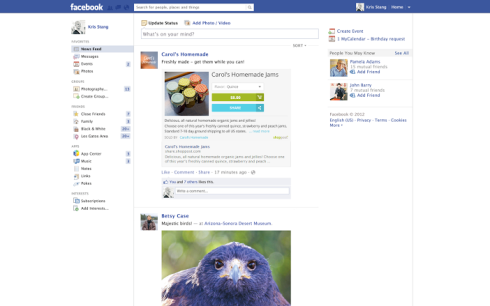
Ever want to sell new merch quickly through social? Or, place a buy button directly on your Facebook post featuring the latest dress you want to push to customers? Well, now you can with Shoppost!
No more tabs or redirects, this free social commerce app allows brands to easily drive awareness for products and sell in Facebook’s newsfeed via an interactive post. Prospects and customers can browse product variations, view photos and/or videos of the product all without leaving Facebook.The app also works with other major social media channels including Twitter, Pinterest and Google+. I had a chance to watch their intro tutorial today, and let me tell you… it looks super user friendly.
If you try it out, which I hope you do, let me know what you think in the comments below. And, learn more by watching their overview video on the Shoppost website here.
Stay tuned!
19 JulHey Consuming PR readers,
After taking a summer break, we’re back. So, not to worry. Keep checking back here for more in the coming days 🙂
Hope you’re enjoying your summer as well!
RVCA Debuts VELVET ECLIPSE Swim Collection & Music Video
12 JunRVCA Velvet Eclipse Swim Collection Video. Filmed in Long Beach, CA by Brandon Jensen. Song by Nylo.
Rather than RVCA debuting their Velvet Swim Collection with only a standard lookbook, the clothing brand has created a music video that brings the pieces to life. This way, consumers can understand the product without going into the store, which could give the consumer a motivation to buy sooner.
Videos like this are not only purchase drivers, but they are also vehicles to communicate the brand identity in a way that draws the consumer into their desirable “lifestyle.” And why not pull it all together with great music? RVCA teamed up with Nylo, who’s Soundcloud can be found here. I liked the song so much, that I let the video play all the way through — great way to keep your viewer watching for longer!
Want to look through all the separates and bodies? Click here: SHOP NOW








 Consuming PR